
This guide contains affiliate links. If you buy through one, Coach Luke may earn a commission at no extra cost to you. Read the disclosure.
Stretching feels like exercise, and some programs promise it will melt fat. So it is fair to ask how many calories it burns and whether it can help with weight loss.
The short answer: stretching burns calories, but not many. It still earns its place in a fat-loss plan for other reasons. Here is the honest breakdown.
Key Takeaways
- Gentle stretching burns about as much as a slow walk
- Flowing routines with bodyweight moves burn more than static holds, but less than brisk walking or strength training
- Stretching helps fat loss indirectly, by keeping you moving and training
- Fat loss still depends mainly on eating habits, strength work and daily movement
How Many Calories Stretching Burns
Slow, static stretching is a low-effort activity. Your heart rate barely rises, so the energy cost is low. A 15-minute session burns about what a slow stroll of the same length would.
Your body size and how hard you work change the number, so treat any calorie figure from a fitness tracker or a sales page as a rough estimate.
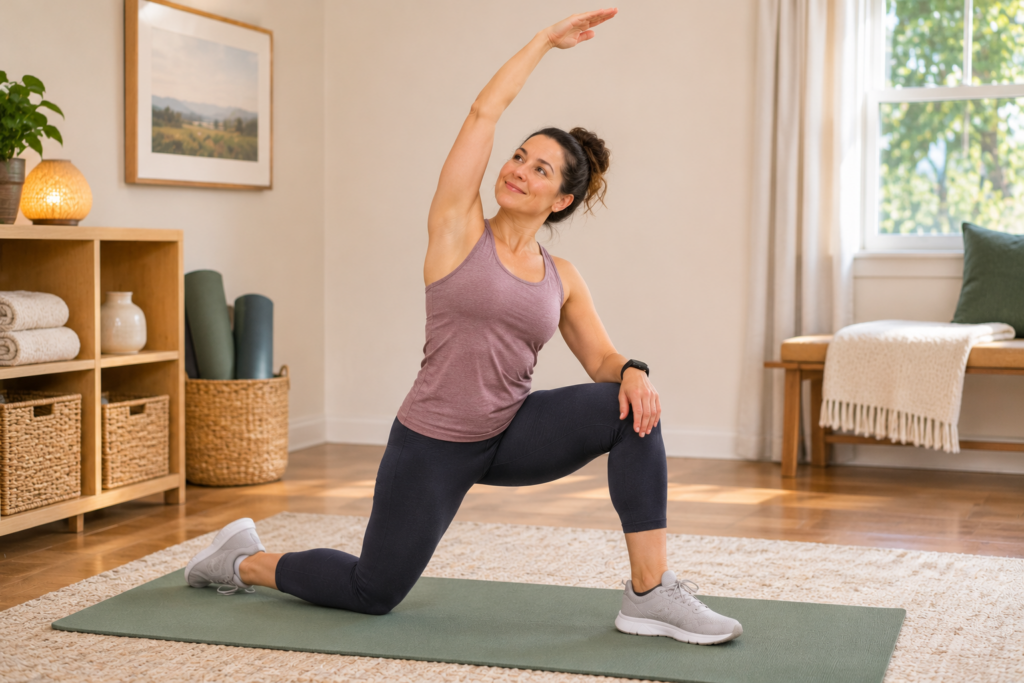
Dynamic stretching is different. When you flow from one move to the next and add bodyweight moves like lunges and squats, your heart rate comes up and the burn rises with it. It is still modest next to brisk walking, cycling or lifting.
What Stretching Does for Fat Loss
- It helps you move comfortably, so walking and workouts feel better and happen more often.
- It makes a good warm-up, which helps you train with better form.
- It gives you something active to do on days you would otherwise skip.
- It can help you wind down in the evening, which makes healthy habits easier to keep.
None of these is a direct fat burner. They are the support crew for the things that are.
What Moves the Needle
Fat loss comes mainly from eating a little less than you burn, keeping your muscle with strength training two or three times a week and moving more through the day. To see your own numbers, try the free Calorie Calculator for Weight Loss on coachluke.com.
Stretching fits best as a short mobility session on easier days or as a warm-up before strength work. A flowing, equipment-free routine does that job well. If stiffness is what keeps you from working out, start with what to do when you feel too stiff to exercise.
Who Should Check With a Doctor First
Talk to your doctor before starting a new routine if you have a current back, hip or knee injury, a heart condition, or are pregnant. Start with the easier version of any routine and move at a pace where you can still talk.
The Bottom Line
Stretching burns a few calories and does a lot for how you move. Use it to support your walking, strength training and eating habits, not to replace them. Curious how fast the flexibility side improves? See how long it takes to get flexible.
This article is for general education and is not medical advice. Check with your doctor before starting a new exercise program, especially if you are pregnant, take medication, or have a health condition or injury.
Stop any exercise that causes sharp pain, chest pain or dizziness, and speak with a qualified health professional about what is right for you. This information does not replace their care.