
This guide contains affiliate links. If you buy through one, Coach Luke may earn a commission at no extra cost to you. Read the disclosure.
You bend forward, your fingers stop somewhere around your shins, and the backs of your legs feel like guitar strings. If touching your toes seems further away every year, you are in good company.
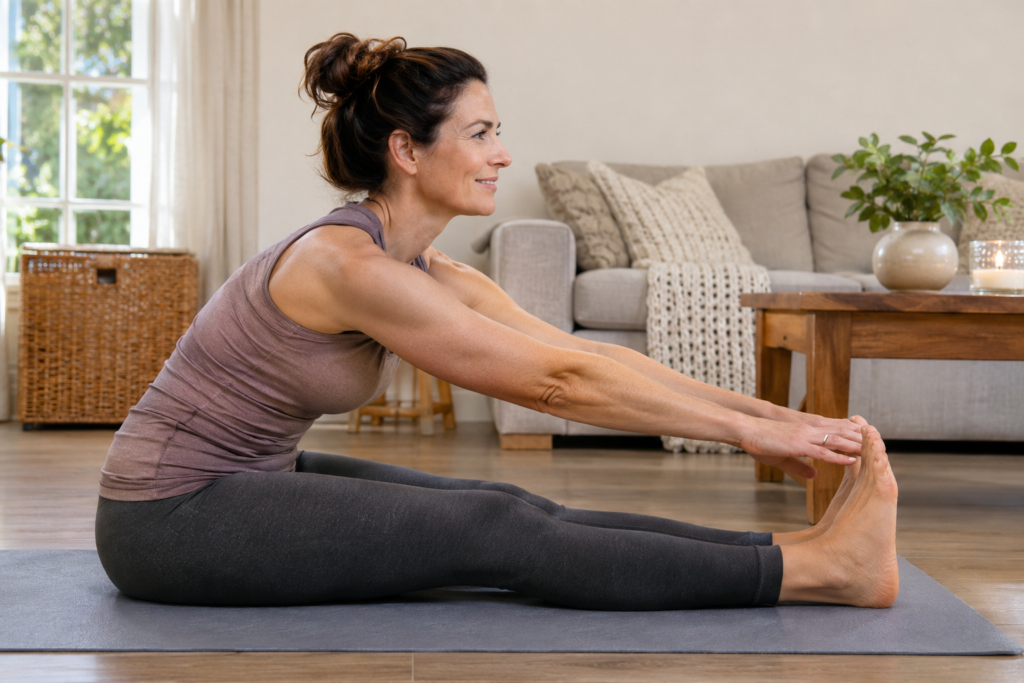
The reach looks simple, but it asks your hamstrings, calves, hips and back to work together. Here are five common reasons it stalls and a simple way to get closer.
Key Takeaways
- A toe touch needs your hamstrings, calves, hips and back to share the bend
- Sitting most of the day leaves little practice at folding forward
- Short daily practice beats one long stretch a week
- Pain, numbness or tingling down a leg is a reason to see a doctor
What a Toe Touch Really Tests
A forward fold is a hip hinge. Your pelvis tips forward over your thigh bones while the muscles along the back of your legs lengthen. If any link in that chain is stiff, your body stops the movement early to protect itself.
Being unable to touch your toes is common and is not a health problem on its own. It is a sign that this movement has not had much practice lately. If you already stretch daily and nothing changes, here is why you can still feel tight.
5 Common Reasons You Can’t Reach
- Tight hamstrings. The muscles at the back of your thighs are the most common limit, especially if you sit a lot.
- Stiff calves. Tight calves pull on the same line down the back of the leg.
- A lower back that does not like to round. After years of bracing, the spine may resist bending forward.
- Hips that do not hinge. If your pelvis stays tucked under, your back does all the work and runs out of room.
- Your proportions. Long legs and shorter arms make the reach harder, and that is just how you are built.
How to Get Closer to Your Toes
Warm up first. March in place or walk for two or three minutes so the muscles are not cold. If you want a gentle guided start, the free 5-Day Yoga Challenge for Beginners from Coach Luke covers the basics.
Then practice the hinge. Stand with soft knees, slide your hands down your thighs and push your hips back as if closing a car door behind you. Stop when you feel a mild pull, breathe out slowly and come back up. Repeat five to eight times.
Add a hamstring stretch you can relax into. Lie on your back, loop a towel around one foot and raise that leg until you feel mild tension. Hold for 20 to 30 seconds per side and do not bounce. Not sure what to expect? See how long it takes to get flexible.
Do this most days. Many people notice they reach a little further within a few weeks. If you would rather follow a video than plan your own routine, a structured program can help you stay consistent.
When to Check With a Doctor
Stretching should feel like mild tension, never sharp pain. See a doctor or a physical therapist if bending forward brings on back pain that travels down a leg, numbness or tingling, or if you are recovering from an injury or surgery.
The Bottom Line
Not touching your toes usually means the back of your body needs more practice at bending, not that something is wrong. Warm up, hinge, stretch gently and give it a few weeks of steady work.
This article is for general education and is not medical advice. Check with your doctor before starting a new exercise program, especially if you are pregnant, take medication, or have a health condition or injury.
Stop any exercise that causes sharp pain, chest pain or dizziness, and speak with a qualified health professional about what is right for you. This information does not replace their care.