
This guide contains affiliate links. If you buy through one, Coach Luke may earn a commission at no extra cost to you. Read the disclosure.
You kneel to weed the garden, clean a low cupboard or play on the floor with a grandchild, and the front of your knee complains right away. Getting back up is not much fun either.
Kneeling pain is one of the most common knee complaints in adults over 40. It rarely means something serious, but it does tell you something useful about how your knees are coping.
Key Takeaways
- Kneeling puts your body weight straight onto the kneecap and the tissues in front of it
- Weak thighs and hips leave the knee to take more of the load
- Padding, shorter kneeling spells and gentle strengthening usually help
- Swelling, warmth or a knee that locks or gives way needs a doctor
Why Kneeling Is Hard on Knees
When you kneel, much of your body weight rests on a small area at the front of the knee. The kneecap is pressed against the thigh bone, and the soft tissue in front of it gets squeezed against the floor.
A deeply bent knee also puts the joint at the end of its range. If your knees are already a little stiff, that position alone can feel sharp or achy. Stairs are the other common test, so see why knees feel weak on the stairs.
5 Common Reasons It Hurts
- Pressure on the kneecap. The cartilage behind the kneecap can get sensitive with age and does not enjoy direct load.
- An irritated bursa. The small fluid-filled cushion in front of the kneecap can swell after a lot of kneeling on hard floors.
- Stiff quads. Tight muscles on the front of the thigh pull the kneecap harder into the joint when the knee bends deeply.
- Weak thighs and hips. When these muscles tire quickly, the knee joint takes more of the strain.
- Wear in the joint. Osteoarthritis often shows up first as pain with kneeling, squatting and stairs.
What Helps at Home
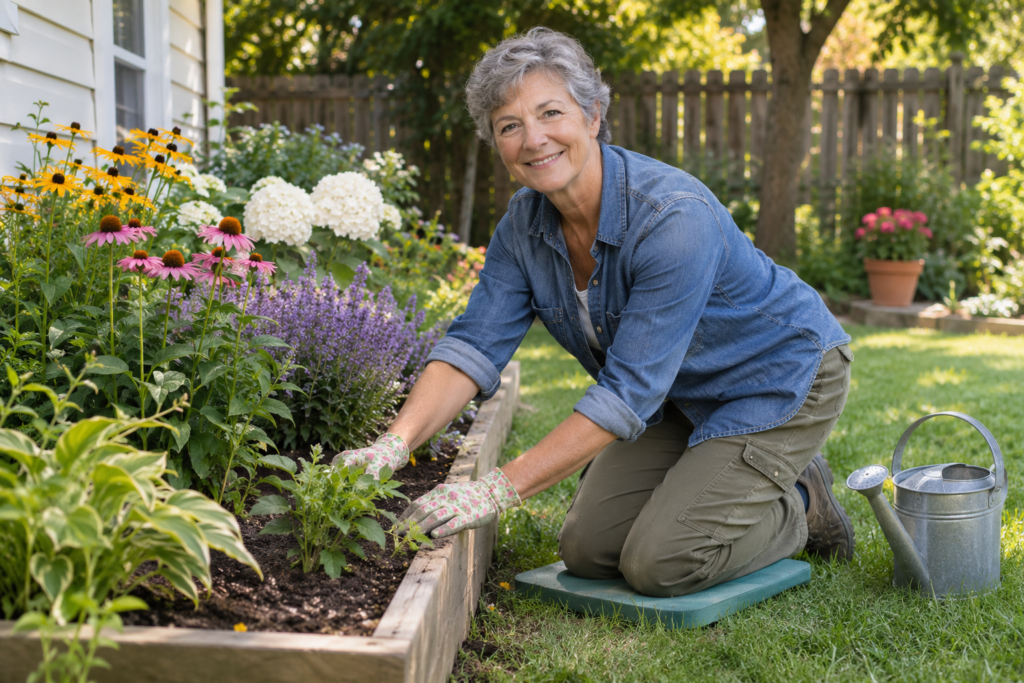
Start with the simple fixes. Kneel on a thick foam pad or a folded towel, switch knees often, and stand up every few minutes instead of staying down for half an hour. A low stool or a half-kneeling position spreads the load.
Warm up first as well. A few minutes of easy walking or gentle knee bends before you get down on the floor makes the first kneel less of a shock.
Then work on the muscles around the joint. Straight leg raises, sit-to-stands from a chair and gentle heel slides build thigh strength without deep bending. The free 5-Day Joint-Friendly Movement Challenge from Coach Luke is an easy way to get moving without flaring things up.
Go slowly. A little effort is fine, but pain that climbs during an exercise or lingers into the next day means you did too much. If you want a short daily routine laid out for you, a structured knee program can save you the guesswork.
When to See a Doctor
Get your knee checked if it is swollen, warm or red, if it locks, catches or gives way, or if the pain started after a fall or twist. A swollen lump on the front of the kneecap that is hot or very tender also needs a look.
The Bottom Line
Knees that hurt when you kneel are usually reacting to pressure and deep bending, often with weak or stiff thigh muscles in the mix. Pad the floor, shorten your time down there and build strength gradually. If you wonder whether it is more than wear and tear, read is it arthritis or just getting older.
This article is for general education and is not medical advice. It does not diagnose or treat any condition. Check with your doctor or a physical therapist before starting a new exercise program, especially if you have an injury, a recent surgery or a health condition.
Stop any movement that causes sharp pain, numbness, tingling or dizziness. See a doctor about pain that is severe, getting worse or has lasted more than a few weeks. This information does not replace their care.