
This guide contains affiliate links. If you buy through one, Coach Luke may earn a commission at no extra cost to you. Read the disclosure.
During the day your sciatica is manageable. Then you lie down, the house goes quiet, and the ache in your buttock or leg seems to turn up.
Night flares are one of the most common complaints with sciatica. Here is why lying down can make it feel worse and how to set yourself up for a calmer night.
Key Takeaways
- Lying still, certain sleep positions and fewer distractions can all make sciatica feel stronger at night
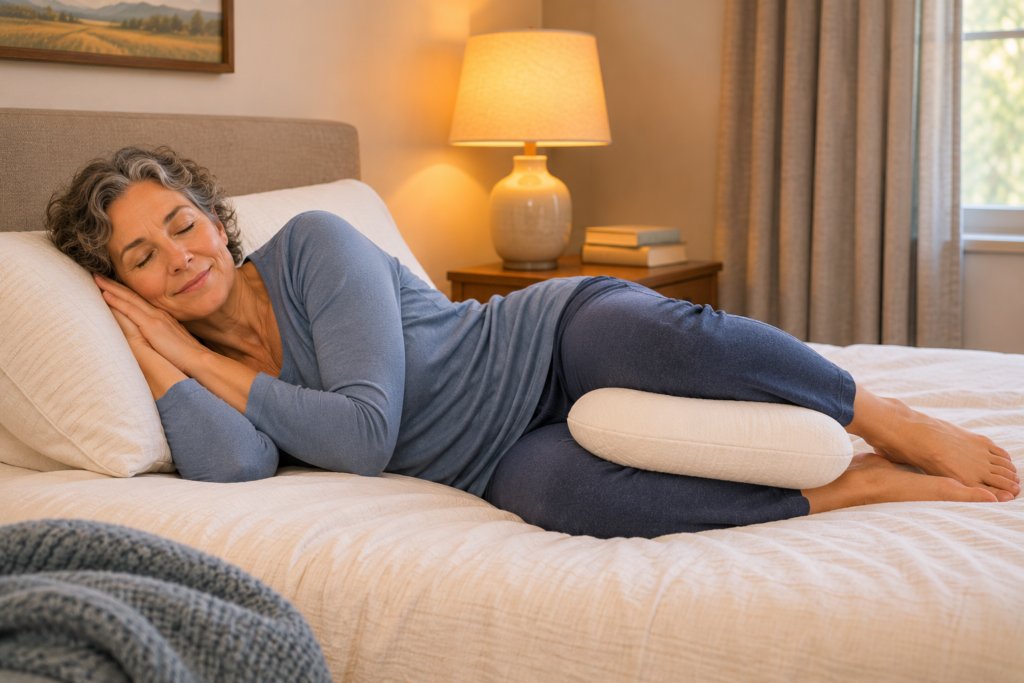
- A pillow between or under the knees keeps the lower back in a more neutral position
- A few minutes of slow, gentle movement before bed helps many people settle
- Numbness in the groin, bladder changes or growing leg weakness needs urgent care
What Sciatica Is
Sciatica is pain that follows the sciatic nerve, from the lower back or buttock down the back of the leg. It is often linked to an irritated nerve root in the lower spine. Many cases ease within several weeks, and staying gently active is part of the standard advice.
Why Sciatica Feels Worse at Night
- Stillness. Hours in one position let the lower back and hips stiffen around an irritated nerve.
- Position. Stomach sleeping arches the lower back, and a twisted side-lying position can pull on the hip.
- Mattress. One that sags lets the hips sink and the spine bend.
- Attention. With nothing else to focus on, pain signals stand out more.
- A long day. Hours of sitting can leave the nerve more sensitive by bedtime.
Sleep Positions Worth Trying
On your side, lie with the painful leg on top and a firm pillow between your knees, so the top leg does not drop forward and twist your pelvis.
On your back, place a pillow or two under your knees. This flattens the arch in the lower back slightly, which some people find takes the edge off.
There is no single best position. Give each one a few nights and keep what lets you fall back asleep fastest. If you wake up stiff as well as sore, see why your back is stiff in the morning.
A Wind-Down Routine Before Bed
Spend five minutes moving slowly before you lie down. Rock your knees from side to side while lying on your back, then do a few easy pelvic tilts. Keep it soft. Hard hamstring stretches can irritate the nerve further. For more on staying active with a sore back, see rest or move with lower back pain.
A steady bedtime and a cool, dark room help too. The free 5-Day Better Sleep Reset Challenge from Coach Luke covers those habits.
If you want guided movements, including ones done lying down, a follow-along program is one option.
When Night Pain Needs a Doctor
Get urgent medical help for sciatica in both legs, numbness around your genitals or bottom, trouble controlling your bladder or bowels, or leg weakness that is getting worse. See a doctor as well if night pain is constant, came on after a fall or comes with fever.
The Bottom Line
Sciatica often feels worse at night because you are still, your position may not suit your back and there is little to distract you. Support your knees with a pillow, move gently before bed and get red-flag symptoms checked.
This article is for general education and is not medical advice. It does not diagnose or treat any condition. Check with your doctor or a physical therapist before starting a new exercise program, especially if you have an injury, a recent surgery or a health condition.
Stop any movement that causes sharp pain, numbness, tingling or dizziness. See a doctor about pain that is severe, getting worse or has lasted more than a few weeks. This information does not replace their care.