
This guide contains affiliate links. If you buy through one, Coach Luke may earn a commission at no extra cost to you. Read the disclosure.
Somewhere after 40, many people notice the small things. Reaching the top shelf takes a little more effort, checking the blind spot means turning the whole body, and tying shoes comes with a grunt.
The natural question is whether that range is gone for good. For most people it is not. Here is what to expect.
Key Takeaways
- Flexibility fades with age mostly because we move through less range each year
- Adults of any age can improve range of motion with regular stretching
- Expect small, steady gains over six to eight weeks
- Hot, swollen or very painful joints need a doctor before a stretching plan
Why Range of Motion Fades
Muscles and connective tissue do get stiffer with age. The bigger factor for most people is use. Each year we bend, reach and get down to the floor a little less, and range that is not used shrinks.
That is good news, because use is something you can change.
How Much Can You Get Back?
Research on stretching consistently shows that adults, including older adults, improve their range of motion with regular practice. You may not get back everything you had at 20, and bone structure and old injuries set some limits. Most people can regain enough to make daily tasks feel easier again. For a week-by-week picture, see how long it takes to get flexible.
A fair way to track it is with simple tests you repeat every two weeks:
- How far down your shins you can reach with soft knees.
- How far you can turn to look over each shoulder while seated.
- Whether you can clasp or nearly touch your hands behind your back.
- How easily you can get down to the floor and back up.
A Gentle Way to Start
Pick five or six stretches that cover your calves, hamstrings, hips, chest and upper back. Hold each for 20 to 30 seconds at mild tension and do them most days. Fifteen minutes is plenty.
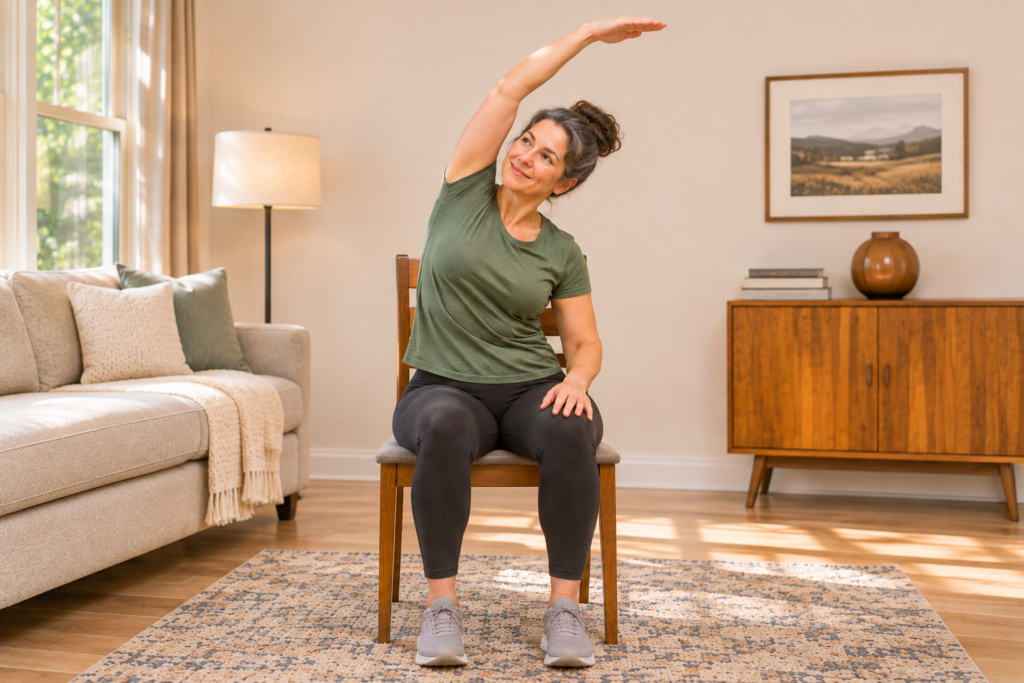
Start in the position you can manage. If the floor is hard to reach, stretch seated or standing and hold on to a counter for support. Move to floor work when it feels comfortable. If getting down there is the hard part, read why it is hard to get up off the floor.
Pair stretching with strength work twice a week. Stronger legs and hips help you use the range you gain, and the free 5-Day Strength Training Starter from Coach Luke shows how to begin.
If choosing and ordering the stretches yourself feels like a chore, a follow-along program takes the planning out of it.
What Stretching Will Not Do
Stretching will not lower your weight, clear your arteries or prevent falls on its own. Balance and leg strength matter more for staying steady. Be wary of any program that sells flexibility as a cure for something else.
When to See a Doctor First
Get personal advice before starting if you have hot, swollen or very painful joints, numbness, a recent surgery or a joint replacement.
The Bottom Line
You can get a meaningful amount of flexibility back after 40. Stretch gently most days, check your progress every two weeks and give it six to eight weeks. To add the strength side without worry, read how to start strength training safely after 45.
This article is for general education and is not medical advice. Check with your doctor before starting a new exercise program, especially if you are pregnant, take medication, or have a health condition or injury.
Stop any exercise that causes sharp pain, chest pain or dizziness, and speak with a qualified health professional about what is right for you. This information does not replace their care.