
This guide contains affiliate links. If you buy through one, Coach Luke may earn a commission at no extra cost to you. Read the disclosure.
You know strength training would help, but walking into a room full of racks, mirrors and people who seem to know what they are doing feels like too much. You are far from alone in that.
The gym is not the only place to get stronger. Starting at home lets you learn the basic moves, build some confidence and see results before you ever set foot in a weight room, if you decide to at all.
Key Takeaways
- Gym nerves are common and are not a reason to skip strength training
- Bodyweight moves and bands can build real strength at home
- Learn a few basic movement patterns first
- Confidence at home makes a gym easier later, if you want one
Why the Gym Feels So Intimidating
Most of the worry comes from not knowing what to do, how to use the equipment or whether people are watching. Those are learning problems, not ability problems. Once you know a handful of moves and how they should feel, a lot of the fear fades. If the worry is more about getting hurt, read how to start strength training safely after 45.
The Five Moves to Learn at Home
Nearly every strength program is built on a few movement patterns. Learn simple versions of these first.
- A squat, such as sitting down to a chair and standing back up
- A hinge, such as a glute bridge or a hip hinge with a broom along your back
- A push, such as a wall or countertop push-up
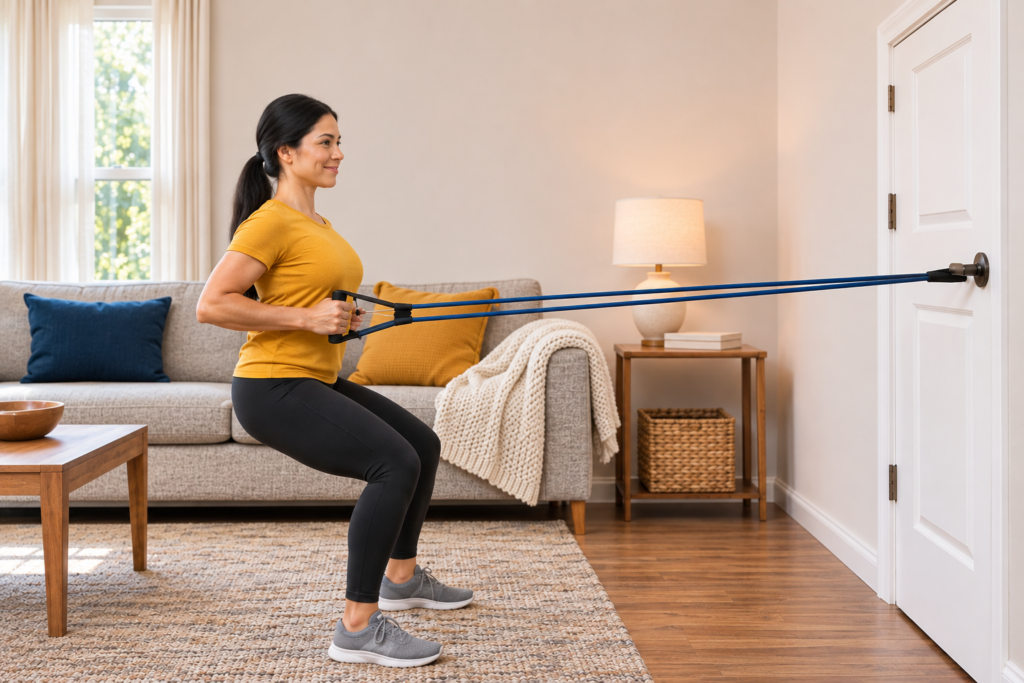
- A pull, such as a band row anchored to a door
- A carry or hold, such as a plank or carrying two full bags across the room
Two or three short sessions a week of these moves will build a real base. For a free, step-by-step start, the 5-Day Glutes Starter from Coach Luke walks you through simple lower body moves. For a closer look at the squat, read why you might not feel your glutes when you squat.
What Equipment Helps at Home
You can start with nothing, but a little equipment goes a long way. Mini bands are cheap, quiet and easy to store, and they add useful resistance to hip, glute and arm moves. A pair of light to medium dumbbells or a longer band with handles comes next once the basics feel easy.
If you would like follow-along workouts that tell you exactly what to do, a beginner band program removes the guesswork.
Getting Ready for the Gym Later
If you want to try the gym after a few months at home, pick a quiet time such as mid-morning, go in with a written plan, and start with the moves you already know. Many gyms offer a free orientation session. You can also stay at home for good. Plenty of people get and stay strong without ever joining one.
The Bottom Line
Feeling intimidated by the gym is common, and it does not have to stop you. Learn five basic moves at home, add bands or light weights, and let your confidence grow before you decide where you want to train.
This article is for general education and is not medical advice. Check with your doctor before starting a new exercise program, especially if you are pregnant, take medication, or have a health condition or injury.
Stop any exercise that causes sharp pain, chest pain or dizziness, and speak with a qualified health professional about what is right for you. This information does not replace their care.