
This guide contains affiliate links. If you buy through one, Coach Luke may earn a commission at no extra cost to you. Read the disclosure.
You finish a set of squats and your thighs are burning, but your glutes feel like they slept through it. It is one of the most common things women say when they start training their lower body.
The good news is that it rarely means something is wrong with you. It usually comes down to how you squat and what a squat is built to do.
Key Takeaways
- Squats train the glutes, but the quads often do most of the felt work
- Depth, stance and where your weight sits change what you feel
- Direct glute moves like bridges and hip thrusts are easier to feel
- Feeling a muscle burn is not the only sign it is working
Squats Are a Thigh Exercise First
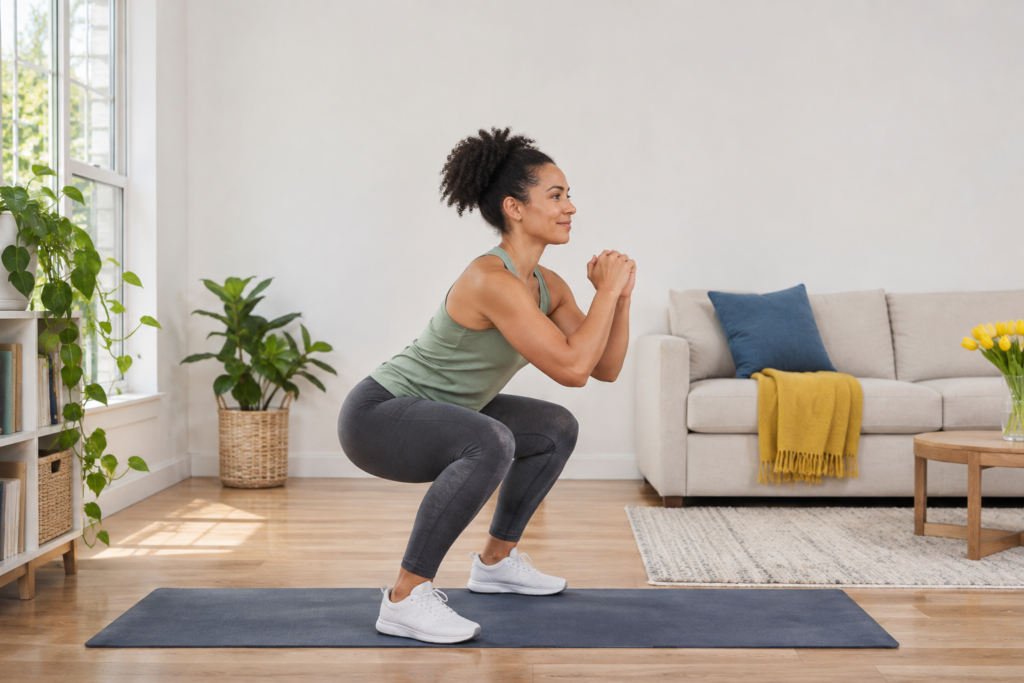
A squat bends your knees and hips at the same time, so it loads your quads and glutes together. For most people the quads take more of the strain, especially in the top half of the movement where the glutes have less to do. That burn in the front of your thighs is normal.
Your glutes are still working. They just tend to work hardest near the bottom of a deep squat and when you drive back up, which is exactly the part many beginners cut short.
Form Fixes That Shift the Work
Small changes can make your glutes easier to feel. Try one at a time so you know which one helps.
- Sit back as if reaching for a chair, rather than letting your knees drift far forward
- Keep your weight across your whole foot, with some pressure through your heels
- Try a slightly wider stance with toes turned out a little
- Go as deep as you can with a flat back and no pain, then pause for a second
- Squeeze your glutes as you stand all the way up
If long hours of sitting leave your hips feeling tight, loosening them first can help. The free 5-Day Desk Body Reset from Coach Luke has short moves for that. Tight hips can also play a part, which is covered in why your hips feel so tight.
Add Moves That Isolate the Glutes
Glute bridges, hip thrusts and side-lying or banded leg raises put the glutes in charge, with far less help from the thighs. Because the movement is simpler, most people feel their glutes working within a few reps. Many trainers use them before squats as a warm-up, so the glutes are already switched on.
A simple plan is two or three sets of bridges and a side-to-side band move before your squats, two or three times a week. You do not need to give up squats to do this. The best results usually come from doing both.
If you want a structured glute plan instead of piecing moves together, a short program can lay it out for you.
Do You Need to Feel It for It to Work?
Not always. Muscles grow from steady, progressive training over weeks, not from a burn in a single set. Feeling the glutes is a useful cue that your form is on track, but if your squats get stronger and your glutes get firmer over time, they are doing their job. If your glutes still are not changing after a few months, read why your glutes are not growing.
If you feel pain in your knees, hips or lower back rather than muscle effort, stop and have your form checked by a trainer or physical therapist.
The Bottom Line
Feeling squats mostly in your thighs is normal. Adjust your depth and stance, add a few direct glute moves, and judge progress over weeks rather than by the burn in one set.
This article is for general education and is not medical advice. Check with your doctor before starting a new exercise program, especially if you are pregnant, take medication, or have a health condition or injury.
Stop any exercise that causes sharp pain, chest pain or dizziness, and speak with a qualified health professional about what is right for you. This information does not replace their care.