
This guide contains affiliate links. If you buy through one, Coach Luke may earn a commission at no extra cost to you. Read the disclosure.
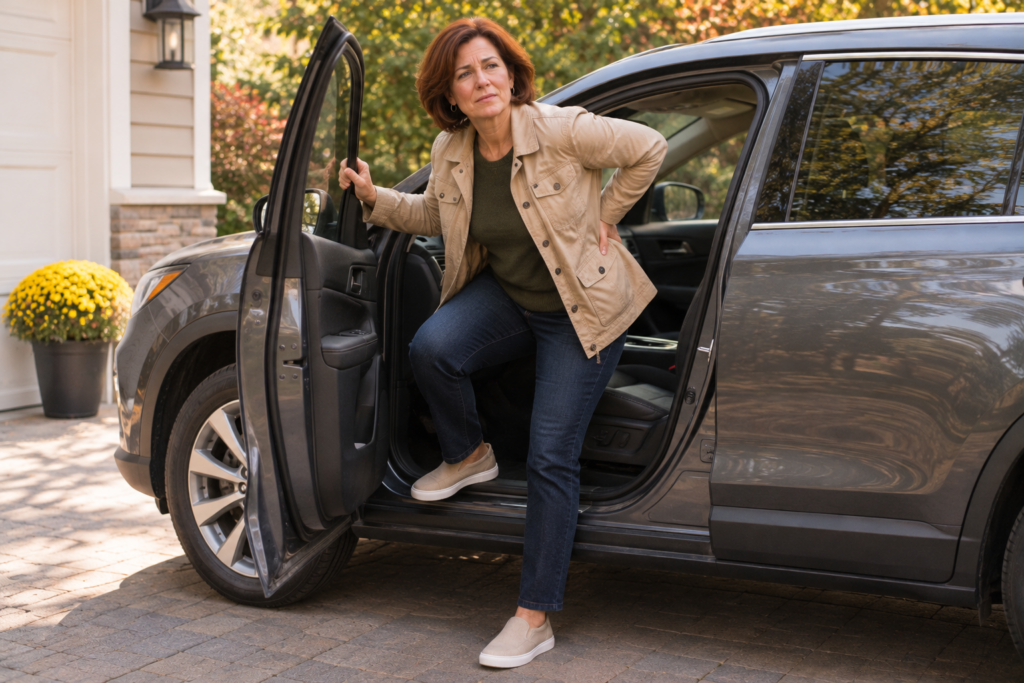
The drive itself is fine. It is the moment you swing one leg out and stand up that your lower back or the back of your pelvis catches.
Getting out of a car combines three things a stiff back dislikes: long sitting, a twist and standing on one leg. Here is why it hurts and how to make it easier.
Key Takeaways
- Getting out of a car loads one side of the pelvis while the spine twists
- Low seats, long drives and a wallet in the back pocket make it worse
- Turning your whole body and standing with both feet takes strain off the lower back and SI joint
- Pain with numbness, weakness or after an accident needs a doctor
Why This Movement Catches Your Back
After a drive, your hips have been bent and your lower back has been still, often in a seat that sits lower than your knees. The tissues are stiff before you even move. It is the same reason for lower back pain when you stand up from sitting.
Then most people plant one foot on the ground, twist and push up through that single leg. That puts a shearing load through one side of the pelvis, right where the sacroiliac joint joins the spine to the hip bones. If that joint or the muscles around it are irritable, this is the moment you feel it.
5 Things That Make It Worse
- A seat that is too low or reclined too far.
- Drives longer than an hour without a stop.
- A wallet or phone in a back pocket, which tilts the pelvis.
- Sitting far from the pedals, so you have to reach with one leg.
- Twisting out while holding a bag in one hand.
A Better Way to Get Out of the Car
Slide the seat back first to give yourself room. Keep your knees together and turn your whole body toward the door, so both feet land on the ground at the same time.
Scoot to the edge of the seat, lean your chest forward from the hips and stand up through both legs, using the door frame for support if you need it. Take a few slow steps before you reach back in for anything.
Set Up Your Seat and Your Drive
Raise the seat so your hips are level with or slightly above your knees, and bring the seat back closer to upright. A small rolled towel behind your lower back helps some people.
On longer trips, stop every 45 to 60 minutes and walk for two minutes. A short daily mobility habit helps too, and the free 5-Day Flexibility Challenge from Coach Luke is an easy way to start one.
Build Support Around the Pelvis
Stronger glutes and a steadier core give the back of the pelvis more support when you load one leg. Glute bridges, clamshells and slow sit-to-stands from a chair are common starting points. Stiff hips add to the problem, so read why your hips are so tight.
For a step-by-step plan aimed at this area, one program is built around the SI joint.
When to See a Doctor
See a doctor if the pain started after a car accident or fall, travels below the knee, or comes with numbness, tingling, leg weakness or changes in bladder or bowel control.
The Bottom Line
Back pain when getting out of the car usually comes from stiffness plus a one-legged twist. Turn your whole body, stand through both feet, adjust your seat and strengthen the muscles around your pelvis.
This article is for general education and is not medical advice. It does not diagnose or treat any condition. Check with your doctor or a physical therapist before starting a new exercise program, especially if you have an injury, a recent surgery or a health condition.
Stop any movement that causes sharp pain, numbness, tingling or dizziness. See a doctor about pain that is severe, getting worse or has lasted more than a few weeks. This information does not replace their care.