
This guide contains affiliate links. If you buy through one, Coach Luke may earn a commission at no extra cost to you. Read the disclosure.
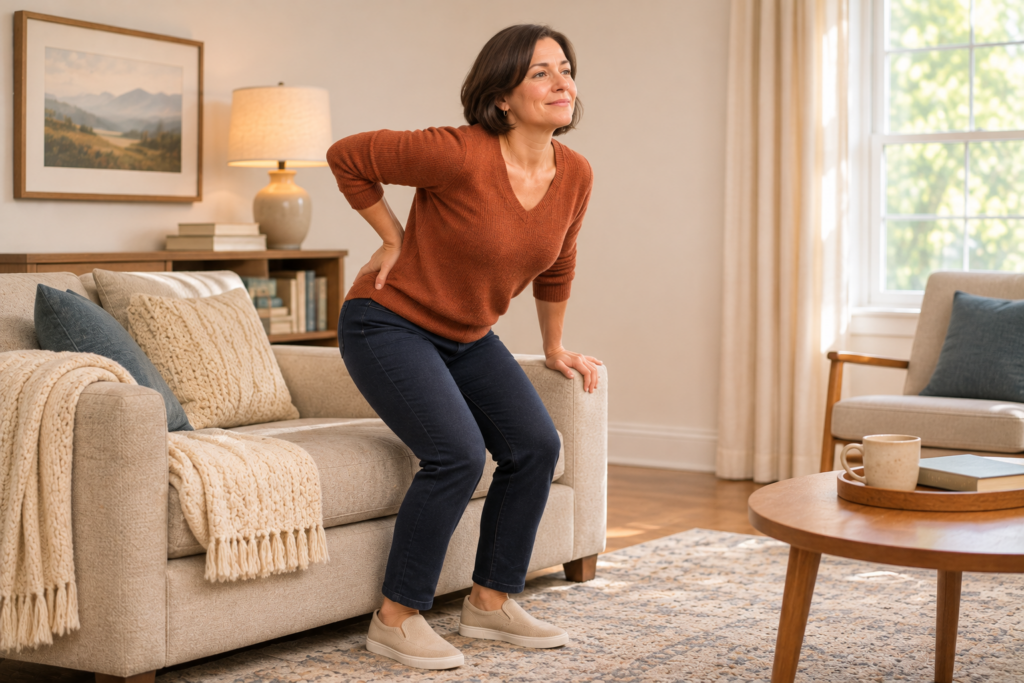
You sit through a long meeting or a drive, stand up, and your lower back grabs for the first few steps. Then it eases off as you walk around.
That pattern is common in people who sit for hours, and the front of the hips is often part of the story. Here is why it happens and what you can do about it.
Key Takeaways
- The hip flexors attach to the lower spine, so stiff hips can tug on the back when you stand
- Pain that eases within a few steps usually points to stiffness, not damage
- Standing up with a hip hinge and a glute squeeze takes load off the lower back
- Numbness, leg weakness or pain after a fall needs a doctor
Why Standing Up Is the Moment It Hurts
When you sit, your hips stay bent and the hip flexors at the front of the hip rest in a shortened position. The deepest one, the psoas, attaches to the bones of your lower spine.
Stand up quickly after an hour in that position and those muscles have to lengthen all at once. If they resist, the lower back often arches to make up the difference, and you feel that as a pinch or an ache across the belt line.
Sitting also lets the glutes switch off while the discs and joints of the lower back settle under steady pressure. None of that is dangerous. It just means the first few steps feel stiff until everything warms up. The same stiffness is behind back pain when getting out of the car.
4 Things That Make It Worse
- Sitting longer than 45 minutes without a break.
- A slumped position with the pelvis tucked under.
- A low, soft couch or car seat that puts the knees above the hips.
- Standing up by leaning back and pushing through the lower back.
How to Stand Up Without the Grab
Before you stand, scoot to the front of the seat and place your feet under your knees. Lean your chest forward from the hips, push through your heels and squeeze your glutes as you rise. That lets the legs do the work.
Once you are up, stand tall and take five slow steps with a long stride before you hurry off. It gives the front of the hips a moment to open. If your whole body feels this way after a chair, read why you are so stiff after sitting.
Daily Habits That Help
Break up sitting first. Set a timer for every 30 to 45 minutes and stand for a minute. The free 5-Day Desk Body Reset Challenge from Coach Luke walks you through simple breaks for a desk schedule.
Add a gentle hip flexor stretch once a day, held for 20 to 30 seconds per side, and two sets of 10 glute bridges. Stretching opens the front of the hip, and bridges teach the glutes to help you stand. If mornings are your worst time, see why your back is stiff in the morning.
If you want a set sequence to follow instead of building your own, a structured hip routine can keep you consistent.
When to See a Doctor
See a doctor or a physical therapist if the pain does not ease after a few minutes of walking, travels below the knee, comes with numbness, tingling or leg weakness, wakes you at night, or started after a fall or accident.
The Bottom Line
A lower back that hurts when you stand up from sitting is usually stiff, not injured. Break up long sitting, stand up with your hips and glutes, stretch the front of the hips and give it a few weeks.
This article is for general education and is not medical advice. It does not diagnose or treat any condition. Check with your doctor or a physical therapist before starting a new exercise program, especially if you have an injury, a recent surgery or a health condition.
Stop any movement that causes sharp pain, numbness, tingling or dizziness. See a doctor about pain that is severe, getting worse or has lasted more than a few weeks. This information does not replace their care.