
This guide contains affiliate links. If you buy through one, Coach Luke may earn a commission at no extra cost to you. Read the disclosure.
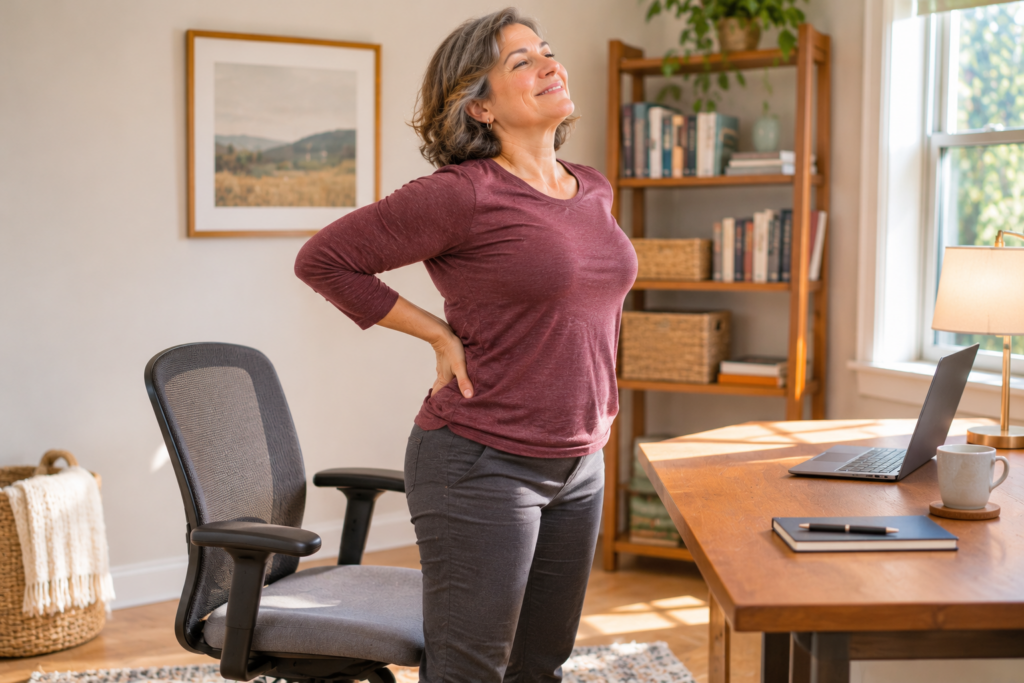
You sit through a film or a long meeting, stand up, and for the first few steps you move like someone twice your age. A minute later you are fine. If that sounds familiar, you are far from alone.
This kind of stiffness after sitting is very common from the 40s onward. Here is what is going on and how to make those first steps easier.
Key Takeaways
- Stiffness that eases within a few minutes of moving usually comes from staying still too long
- Hips, hamstrings and the lower back are the usual stiff spots after sitting
- Movement breaks every 30 to 45 minutes prevent most of it
- Stiffness that lasts more than 30 to 60 minutes, or comes with swollen joints, needs a doctor
What Is Going On When You Stand Up
When you sit, your hips and knees stay bent and the muscles around them rest in a shortened position. Your joints also rely on movement to spread their lubricating fluid, so a long spell of stillness leaves them feeling slow to get going. If it is mainly your lower back that grabs, see why your lower back hurts when you stand up from sitting.
Connective tissue also becomes less elastic with age, so the same hour in a chair can leave you stiffer at 50 than it did at 25. None of that is damage. It is your body asking for movement. Mornings work the same way, as explained in why your back is stiff in the morning.
Why It Is Worse Some Days
- You sat longer than usual, such as on a long drive or flight.
- You were less active the day before, or much more active than normal.
- Your chair puts your hips lower than your knees.
- You slept badly or are run down.
- The room is cold.
Easy Fixes for Your Day
Break up sitting before stiffness sets in. Stand up every 30 to 45 minutes, even for 60 seconds. If your job keeps you at a desk, the free 5-Day Desk Body Reset Challenge from Coach Luke is built around short breaks like these.
Move before you stand. Straighten each knee a few times, circle your ankles and rock your pelvis forward and back. Ten seconds of this makes the first steps smoother.
Add a short daily stretching habit. Gentle stretches for the hips, hamstrings, calves and upper back, done most days, raise your baseline so that sitting takes less out of you. Seated and standing versions count. If the floor is part of the struggle, read why it is hard to get up off the floor.
When Stiffness Needs a Doctor
See your doctor if stiffness lasts longer than 30 to 60 minutes after you get moving, if joints are hot, swollen or very painful, if it comes with numbness or weakness, or if it appeared suddenly along with feeling unwell. Those patterns can point to a joint condition that needs proper care.
The Bottom Line
Feeling stiff after sitting is mostly a movement problem with a movement answer. Sit for shorter spells, warm up before you stand and stretch a little every day. Stiff everywhere, not just after sitting? Read why your whole body feels stiff after 50.
This article is for general education and is not medical advice. It does not diagnose or treat any condition. Check with your doctor or a physical therapist before starting a new exercise program, especially if you have an injury, a recent surgery or a health condition.
Stop any movement that causes sharp pain, numbness, tingling or dizziness. See a doctor about pain that is severe, getting worse or has lasted more than a few weeks. This information does not replace their care.